

Sadness is one of the most universal human emotions, yet it is often the hardest to describe clearly. This is where similes become powerful tools in figurative language.
Similes help writers compare feelings to familiar images, making emotions easier to see, feel, and understand.
By using comparisons drawn from nature, daily life, and literature, sadness can be expressed with depth instead of plain statements.
Powerful similes for sadness turn quiet pain into vivid imagery that resonates with readers. They are not only symbols of sorrow, but also of strength, growth, resilience, wisdom, and emotional awareness.
Through thoughtful comparisons, writers can show vulnerability while maintaining beauty in language. This article explores meaningful similes that help transform sadness into expressive, memorable writing.
What Is a Simile?
A simile is a figure of speech that compares two different things using the words “like” or “as.” It helps readers understand emotions, ideas, or images more clearly by linking them to something familiar.
Example: Her sadness was like a heavy cloud that refused to move.
30 Powerful Similes for Sadness
1. Sadness like a heavy cloud hanging low
Meaning: A constant feeling of emotional weight
Usage Insight: Best for describing long-lasting or lingering sorrow
- Sadness hung over him like a heavy cloud hanging low.
- Her mood darkened like a cloud that blocked the sun.
- The room felt quiet under that emotional cloud.
- His words carried the weight of a stormy sky.
- The day felt darker because of her sadness.
- Grief hovered over the family like thick clouds.
- His heart felt shaded by sorrow.
2. Sadness like rain that never seems to stop
Meaning: Continuous emotional pain
Usage Insight: Effective in reflective or poetic writing
- Sadness fell like rain that never stopped.
- Her tears matched the endless drizzle outside.
- His thoughts felt soaked in sorrow.
- The days passed under emotional rainfall.
- Grief poured into his life quietly.
- Her voice sounded damp with sadness.
- The pain washed over him daily.
3. Sadness like a wilted flower
Meaning: Loss of joy or energy
Usage Insight: Ideal for gentle, emotional descriptions
- She felt like a wilted flower in the heat.
- His smile faded like a dying bloom.
- Sadness bent her spirit downward.
- The joy drained slowly from her face.
- He looked tired and emotionally dry.
- Hope withered under grief.
- Her laughter felt fragile.
4. Sadness like an empty room
Meaning: Loneliness or emotional emptiness
Usage Insight: Useful for themes of isolation
- His heart felt like an empty room.
- Silence echoed inside her thoughts.
- The house felt hollow without him.
- Sadness filled the space with nothingness.
- Her life felt vacant and quiet.
- Emptiness replaced warmth.
- The walls seemed to listen.
5. Sadness like a setting sun
Meaning: Gradual loss or ending
Usage Insight: Works well in reflective narratives
- Hope faded like a setting sun.
- His joy slipped below the horizon.
- The day ended with emotional dusk.
- Light slowly disappeared from her eyes.
- Sadness marked the close of happiness.
- The warmth drained away.
- Night arrived quietly.
6. Sadness like a slow-moving fog
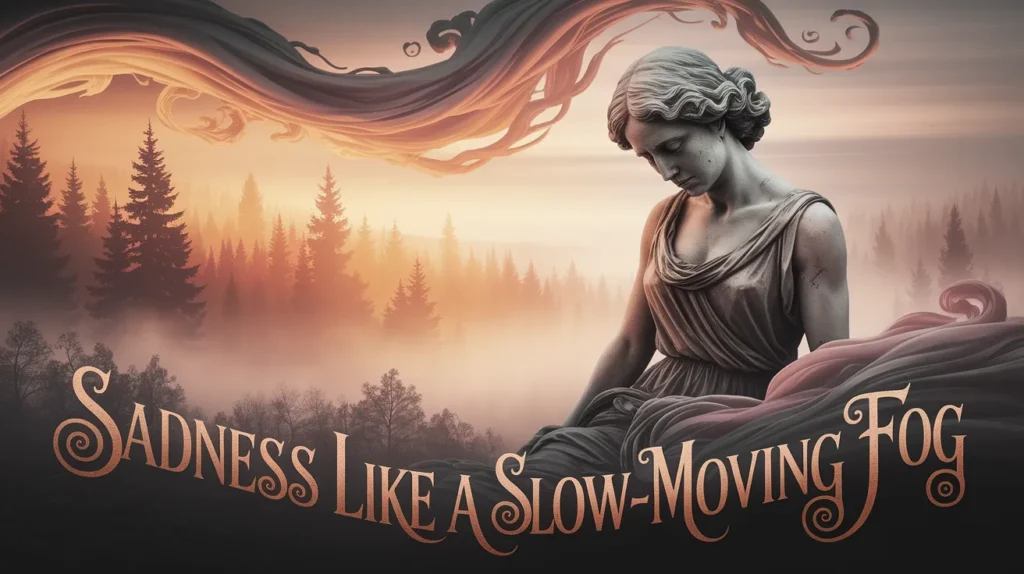
Meaning: Confusion mixed with sorrow
Usage Insight: Great for internal emotional struggles
- Sadness rolled in like fog.
- His thoughts blurred under grief.
- She walked through emotional mist.
- Everything felt unclear and heavy.
- Fog settled inside his mind.
- Direction felt lost.
- The world looked distant.
7. Sadness like a cracked mirror
Meaning: Emotional brokenness
Usage Insight: Strong for personal or psychological writing
- His reflection felt broken.
- Sadness fractured her self-image.
- Nothing looked whole anymore.
- The cracks spread quietly.
- She avoided looking within.
- Pain distorted reality.
- Healing felt far away.
8. Sadness like a dying candle
Meaning: Fading hope
Usage Insight: Ideal for symbolic writing
- Her hope flickered weakly.
- The flame trembled in sorrow.
- Darkness crept closer.
- Light slowly disappeared.
- Sadness consumed the glow.
- Silence followed the dimming flame.
- Only smoke remained.
9. Sadness like cold winter air
Meaning: Emotional numbness
Usage Insight: Best for detached or quiet sadness
- Sadness chilled his heart.
- Her words felt cold.
- Emotions froze inside him.
- Winter lived in his chest.
- Warmth felt distant.
- The air felt sharp.
- Comfort was scarce.
10. Sadness like a sinking ship
Meaning: Overwhelming despair
Usage Insight: Works well in dramatic scenes
- Hope sank beneath sorrow.
- He felt pulled under emotionally.
- Sadness filled every corner.
- There was no escape.
- Panic met despair.
- The weight grew heavier.
- Silence followed the fall.
11. Sadness like a broken violin
Meaning: Lost harmony
Usage Insight: Effective in artistic or musical contexts
- His heart played broken notes.
- Sadness ruined the melody.
- Music lost its beauty.
- Silence replaced harmony.
- Pain echoed softly.
- The tune felt incomplete.
- Joy sounded wrong.
12. Sadness like fallen autumn leaves
Meaning: Gentle, natural sorrow
Usage Insight: Ideal for reflective essays
- Sadness drifted quietly.
- Leaves mirrored her emotions.
- Change brought sorrow.
- Beauty mixed with loss.
- Time moved gently.
- Colors faded slowly.
- Acceptance followed grief.
13. Sadness like a locked door
Meaning: Emotional isolation
Usage Insight: Strong for character development
- He closed himself off.
- Sadness locked his heart.
- No one could enter.
- Words failed to open it.
- Trust felt distant.
- Silence guarded him.
- Loneliness remained.
14. Sadness like a deep ocean
Meaning: Profound emotional depth
Usage Insight: Perfect for intense emotional writing
- Sadness felt endless.
- Depths hid pain.
- She drowned in emotion.
- Calm masked turmoil.
- Waves of grief came.
- Darkness lived below.
- Strength struggled to rise.
15. Sadness like a fading photograph
Meaning: Memories losing warmth
Usage Insight: Works well in nostalgic writing
- Memories blurred with sadness.
- Colors faded slowly.
- Time erased happiness.
- The image lost clarity.
- Emotions softened.
- Pain lingered quietly.
- The past felt distant.
16. Sadness like a silent scream

Meaning: Hidden pain
Usage Insight: Powerful for inner conflict
- Pain screamed inside.
- No one heard him.
- Sadness stayed quiet.
- His face remained calm.
- The noise lived within.
- Silence spoke loudly.
- Strength masked sorrow.
17. Sadness like a dark tunnel
Meaning: Hopelessness
Usage Insight: Effective for recovery narratives
- He walked through darkness.
- The end felt far.
- Sadness blocked the light.
- Steps felt heavy.
- Hope flickered faintly.
- Fear followed him.
- Strength carried him forward.
18. Sadness like ashes after a fire
Meaning: Emotional aftermath
Usage Insight: Best for loss and recovery themes
- Joy burned away.
- Sadness remained behind.
- Everything felt gray.
- Silence followed passion.
- Life felt empty.
- Healing began slowly.
- New growth waited.
19. Sadness like a broken clock
Meaning: Feeling stuck in pain
Usage Insight: Great for trauma-related writing
- Time stopped emotionally.
- Sadness froze moments.
- Healing felt delayed.
- Life paused.
- Movement felt impossible.
- Memories repeated.
- Progress waited.
20. Sadness like a shadow at dusk
Meaning: Quiet, lingering sorrow
Usage Insight: Ideal for subtle emotional scenes
- Sadness followed him.
- It lengthened quietly.
- Darkness grew slowly.
- Light still existed.
- The day faded.
- Peace mixed with pain.
- Night arrived gently.
21. Sadness like a torn letter
Meaning: Unspoken emotions
Usage Insight: Effective in personal writing
- Words stayed unread.
- Feelings remained broken.
- Sadness cut communication.
- Meaning felt lost.
- Regret followed.
- Silence replaced words.
- Healing needed honesty.
22. Sadness like a drained river
Meaning: Emotional exhaustion
Usage Insight: Best for burnout themes
- Energy disappeared.
- Sadness emptied him.
- Nothing flowed anymore.
- Dryness remained.
- Hope needed rain.
- Rest felt necessary.
- Renewal awaited.
23. Sadness like a torn sail
Meaning: Lost direction
Usage Insight: Works well in life-transition writing
- His plans failed.
- Sadness broke direction.
- Progress slowed.
- Winds felt useless.
- Control vanished.
- Strength adapted.
- New paths formed.
24. Sadness like a dim hallway
Meaning: Uncertainty
Usage Insight: Effective in suspenseful writing
- The future felt unclear.
- Sadness darkened choices.
- Steps felt cautious.
- Light waited ahead.
- Fear followed him.
- Hope guided faintly.
- Courage moved forward.
25. Sadness like a fading echo
Meaning: Lingering emotional pain
Usage Insight: Great for endings
- Pain softened slowly.
- Sadness echoed briefly.
- Silence followed.
- Time healed wounds.
- Strength replaced sorrow.
- Peace arrived quietly.
- Acceptance remained.
26. Sadness like cracked ice

Meaning: Emotional fragility
Usage Insight: Ideal for vulnerable moments
- He felt unstable.
- Sadness threatened collapse.
- Strength felt thin.
- Care was needed.
- One step mattered.
- Support helped.
- Healing began.
27. Sadness like a burnt-out star
Meaning: Lost brilliance
Usage Insight: Works well in reflective writing
- Her light faded.
- Sadness dimmed her glow.
- The sky felt emptier.
- Memories shined faintly.
- Strength remained inside.
- Darkness passed slowly.
- New light waited.
28. Sadness like an unanswered call
Meaning: Emotional neglect
Usage Insight: Strong for relationship writing
- He waited for comfort.
- Silence answered him.
- Sadness grew louder.
- Connection failed.
- Hope rang again.
- Patience remained.
- Healing needed response.
29. Sadness like fallen glass
Meaning: Sharp emotional pain
Usage Insight: Best for intense scenes
- Pain cut deeply.
- Sadness shattered him.
- Care was needed.
- Healing took time.
- Scars remained.
- Strength grew slowly.
- Lessons stayed.
30. Sadness like twilight before night
Meaning: Transition into darkness
Usage Insight: Ideal for emotional turning points
- Sadness marked change.
- Light still existed.
- Darkness approached.
- Hope lingered briefly.
- Emotions mixed.
- Strength prepared.
- Acceptance followed.
How to Use Similes Effectively in Writing
Using similes is not just about adding beauty—it is about creating clarity and emotional impact. Here are practical ways to use similes effectively:
1. Use Similes to Show Emotion Instead of Telling It
Instead of writing “He was sad,” write something like:
“His sadness hung like fog over his thoughts.”
2. Match the Simile With the Mood
For poems and songs, nature similes like storms, rain, fog, and shadows create strong emotional tone.
For essays, use simpler comparisons like stones, knots, or wounds for realism.
3. Avoid Overusing Similes
Similes are powerful, but too many can overwhelm your writing. Use them in key emotional moments.
4. Make the Comparison Relatable
The best similes connect with experiences readers understand—like cold winds, empty houses, or ticking clocks.
5. Use Similes to Strengthen Characters
In stories, similes reveal inner emotions. A character who feels sadness like “a sinking ship” appears defeated, while one who feels sadness like “a flickering candle” seems fragile but still hopeful.
6. Blend Similes With Strong Descriptions
Similes work best when combined with sensory details like sound, sight, touch, and atmosphere.
FAQs
1. What are powerful similes for sadness?
They are comparisons that vividly express sorrow using familiar images.
2. How are similes different from metaphors?
Similes use “like” or “as,” while metaphors do not.
3. Can similes be used in academic writing?
Yes, when used carefully for explanation or analysis.
4. Why are similes important in literature?
They create imagery, emotion, and deeper understanding.
5. Can similes help in poetry and songs?
Absolutely, they add emotion, rhythm, and clarity.
Conclusion
Powerful similes for sadness allow writers to transform quiet emotions into vivid, relatable images.
They add clarity, emotional depth, and beauty to language while helping readers truly feel what is being expressed.
From nature similes to literary comparisons, these tools enrich poems, stories, essays, and songs.
When used thoughtfully, similes turn sadness into strength, reflection into wisdom, and pain into meaningful expression. Mastering them strengthens your writing and deepens human connection through words.