
Fear is one of the most intense and universal human emotions, and language gives us powerful tools to express it vividly. One of the most effective tools is the simile—a comparison that helps readers feel what words alone sometimes cannot fully convey.
Similes connect unfamiliar emotions to familiar images, making writing more relatable and engaging. When we use powerful similes for fear, we turn abstract feelings into something visible, tangible, and memorable.
These comparisons often draw from nature, everyday life, and human experience to reflect strength, vulnerability, and resilience.
Fear, though unsettling, also represents growth, awareness, and survival instincts. By mastering similes, writers can transform simple descriptions into emotionally rich expressions.
In this article, you’ll explore a wide range of creative, meaningful, and impactful similes for fear.
What Is a Simile?
A simile is a figure of speech that compares two different things using the words “like” or “as”.
Example: Her heart pounded like a drum in the dark.
This comparison helps readers clearly imagine and feel the intensity of fear.
1. Fear like a shadow creeping at dusk
Meaning: Fear slowly approaches and surrounds you.
Usage: Ideal for suspenseful or quiet scenes.
Examples:
- His fear moved like a shadow creeping at dusk.
- It followed her thoughts like a shadow at dusk.
- The silence made fear grow like a creeping shadow.
- Doubt spread like dusk shadows in his mind.
- Her worry lingered like a shadow at nightfall.
2. Fear like ice in the veins
Meaning: Sudden, chilling fear.
Usage: Best for shock or terror moments.
Examples:
- Fear ran through him like ice in his veins.
- The news hit her like freezing ice.
- Panic spread like cold ice inside him.
- Her body stiffened like frozen veins.
- The sound filled him with icy fear.
3. Fear like a trapped bird beating its wings
Meaning: Panic and helplessness.
Usage: Great for emotional distress scenes.
Examples:
- His fear fluttered like a trapped bird.
- Her heart raced like wings in a cage.
- Anxiety beat wildly inside her chest.
- Panic fluttered like a caged bird.
- Fear struggled inside him like trapped wings.
4. Fear like thunder before a storm
Meaning: Warning of something worse coming.
Usage: Perfect for foreshadowing.
Examples:
- His fear rumbled like distant thunder.
- Tension built like a coming storm.
- Fear echoed like thunder in silence.
- The moment felt like thunder before rain.
- Unease grew like a storm warning.
5. Fear like a flickering candle in the wind
Meaning: Fragile and unstable fear.
Usage: Good for vulnerability themes.
Examples:
- Her courage flickered like a candle.
- Fear trembled like a weak flame.
- His confidence shook like candlelight.
- Anxiety danced like a fragile flame.
- Hope flickered beside fear.
6. Fear like roots gripping the earth
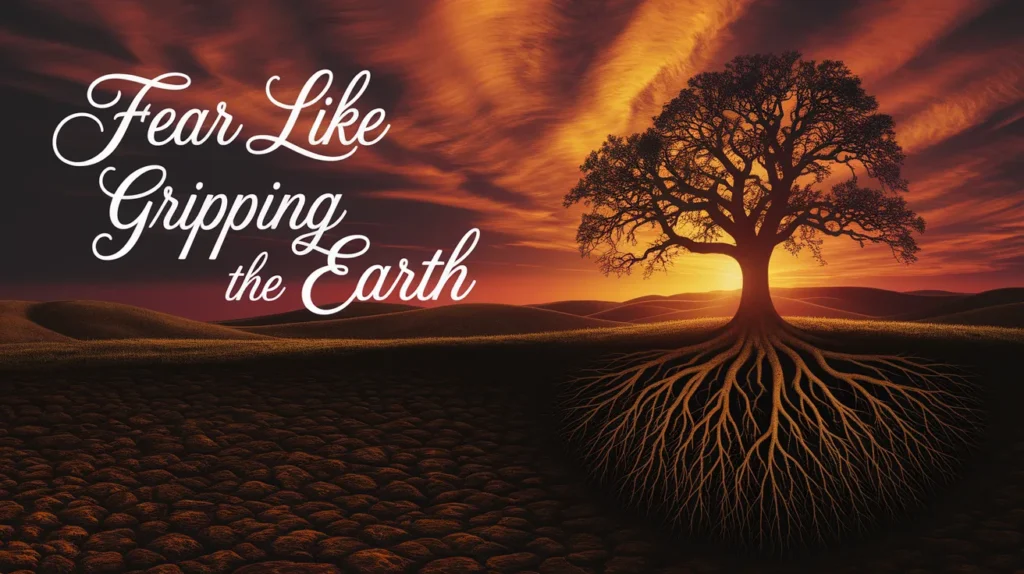
Meaning: Deep and unshakable fear.
Usage: Strong emotional attachment scenes.
Examples:
- Fear held him like deep roots.
- It clung tightly like buried roots.
- His anxiety grew deep and firm.
- Fear anchored itself inside him.
- It stayed like roots in soil.
7. Fear like a storm raging inside
Meaning: Intense internal conflict.
Usage: Emotional storytelling.
Examples:
- Fear raged like a storm within.
- His mind stormed with worry.
- Anxiety roared like wild winds.
- Her thoughts crashed like waves.
- Fear surged like a storm.
8. Fear like a whisper in the dark
Meaning: Subtle but haunting fear.
Usage: Suspense or horror writing.
Examples:
- Fear whispered in the dark.
- It lingered like a quiet voice.
- Doubt crept softly into her mind.
- The silence carried fear.
- Fear spoke without sound.
9. Fear like chains around the heart
Meaning: Restricting and controlling fear.
Usage: Emotional struggles.
Examples:
- Fear chained his heart tightly.
- It held her back like chains.
- Anxiety restricted her freedom.
- Fear locked his courage away.
- His heart felt trapped.
10. Fear like a rising tide
Meaning: Gradually increasing fear.
Usage: Builds tension.
Examples:
- Fear rose like the tide.
- Panic slowly filled him.
- Anxiety grew with each second.
- Fear crept higher and higher.
- His worry expanded steadily.
11. Fear like a knife in the dark
Meaning: Sudden and sharp fear
Usage: Unexpected danger
Examples:
- Fear struck like a hidden knife.
- It came without warning.
- Panic cut through his calm.
- Fear pierced his thoughts.
- It arrived swiftly and sharply.
12. Fear like fog covering the mind
Meaning: Confusion and uncertainty
Usage: Mental struggle
Examples:
- Fear clouded his thoughts.
- Her mind felt foggy with worry.
- Anxiety blurred her focus.
- Fear made everything unclear.
- Doubt filled her mind.
13. Fear like fire spreading quickly
Meaning: Rapidly growing fear
Usage: Urgent situations
Examples:
- Fear spread like wildfire.
- Panic moved fast through the crowd.
- Anxiety grew in seconds.
- Fear consumed his calm.
- It burned through his confidence.
14. Fear like a cracked mirror
Meaning: Distorted perception
Usage: Psychological themes
Examples:
- Fear distorted reality.
- His thoughts shattered like glass.
- Anxiety broke his clarity.
- Fear reflected false images.
- Everything felt broken.
15. Fear like footsteps behind you
Meaning: Constant unease
Usage: Suspense
Examples:
- Fear followed like footsteps.
- He felt watched constantly.
- Anxiety stayed close behind.
- Fear never left him.
- It chased his thoughts.
16. Fear like a door creaking open
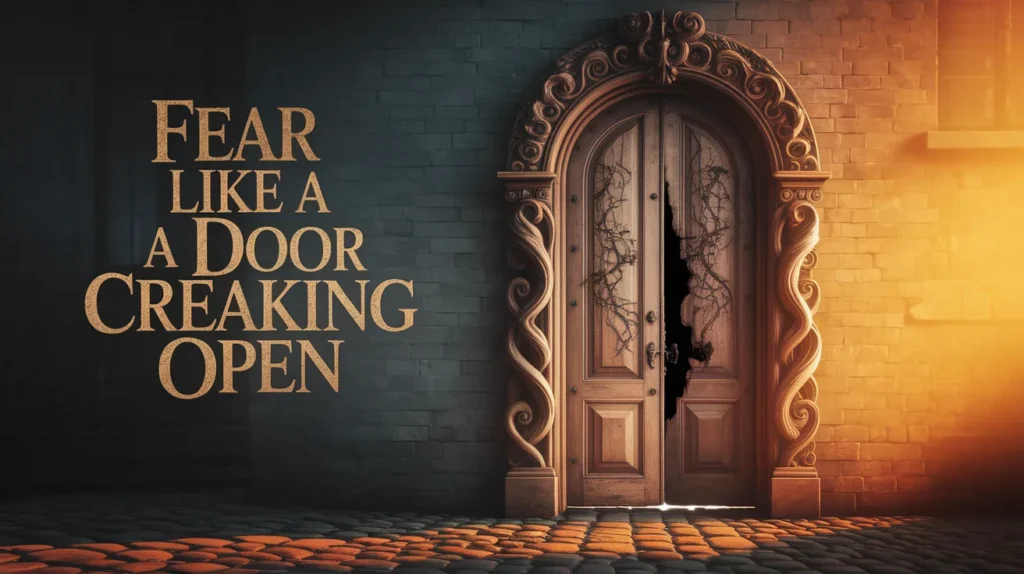
Meaning: Slow-building fear or suspense.
Usage: Perfect for eerie or tense scenes.
Examples:
- Fear crept in like a door creaking open.
- The silence stretched like a slow creak in the dark.
- His unease grew quietly, like a door opening by itself.
- Anxiety slipped into her mind without warning.
- The moment unfolded like a creaking hinge.
17. Fear like a snake coiling tighter
Meaning: Growing tension and pressure.
Usage: Useful in intense or threatening situations.
Examples:
- Fear tightened like a snake around his chest.
- Anxiety coiled inside her with every second.
- His worry squeezed him tighter and tighter.
- Fear wrapped around his thoughts.
- Panic pressed inward like a coiling snake.
18. Fear like a ticking clock
Meaning: Increasing urgency and tension.
Usage: Ideal for time-sensitive situations.
Examples:
- Fear ticked loudly in his mind.
- Each second passed like a warning.
- Anxiety counted down inside her.
- Fear grew louder with time.
- The moment felt like a ticking clock.
19. Fear like a crack in thin ice
Meaning: Sudden danger and instability.
Usage: Best for fragile or risky moments.
Examples:
- Fear spread like a crack in ice.
- The situation felt ready to break.
- Anxiety widened beneath him.
- His confidence shattered instantly.
- Fear made everything unstable.
20. Fear like a wave about to crash
Meaning: Overwhelming and unavoidable fear.
Usage: Strong emotional buildup.
Examples:
- Fear rose like a crashing wave.
- Panic built with unstoppable force.
- Anxiety surged toward him.
- The moment overwhelmed her completely.
- Fear hit like a powerful wave.
21. Fear like a ghost lingering nearby
Meaning: Constant, haunting fear.
Usage: Great for psychological or eerie tones.
Examples:
- Fear lingered like a ghost beside him.
- It stayed close, unseen but felt.
- Anxiety hovered in the background.
- Fear refused to leave her thoughts.
- It followed him quietly everywhere.
22. Fear like a storm cloud overhead
Meaning: Looming and heavy fear.
Usage: Foreshadowing or tension-building.
Examples:
- Fear hung like a dark cloud.
- Anxiety loomed above her thoughts.
- His mood darkened with fear.
- The moment felt heavy and tense.
- Fear shadowed everything around him.
23. Fear like a heart skipping a beat
Meaning: Sudden shock or alarm.
Usage: Quick emotional reactions.
Examples:
- Fear hit like a skipped heartbeat.
- Her chest tightened instantly.
- Panic came in a sudden jolt.
- Fear startled him deeply.
- The moment shocked her completely.
24. Fear like a cage with no escape
Meaning: Feeling trapped and helpless.
Usage: Emotional or mental confinement.
Examples:
- Fear trapped him like a cage.
- She felt stuck with no way out.
- Anxiety closed in around her.
- Fear limited his every move.
- His thoughts felt imprisoned.
25. Fear like wind howling through cracks
Meaning: Uneasy and unsettling fear.
Usage: Atmosphere and tension.
Examples:
- Fear howled like wind in cracks.
- The silence carried uneasy sounds.
- Anxiety whispered through his mind.
- Fear echoed in the stillness.
- The moment felt cold and hollow.
26. Fear like a sudden blackout
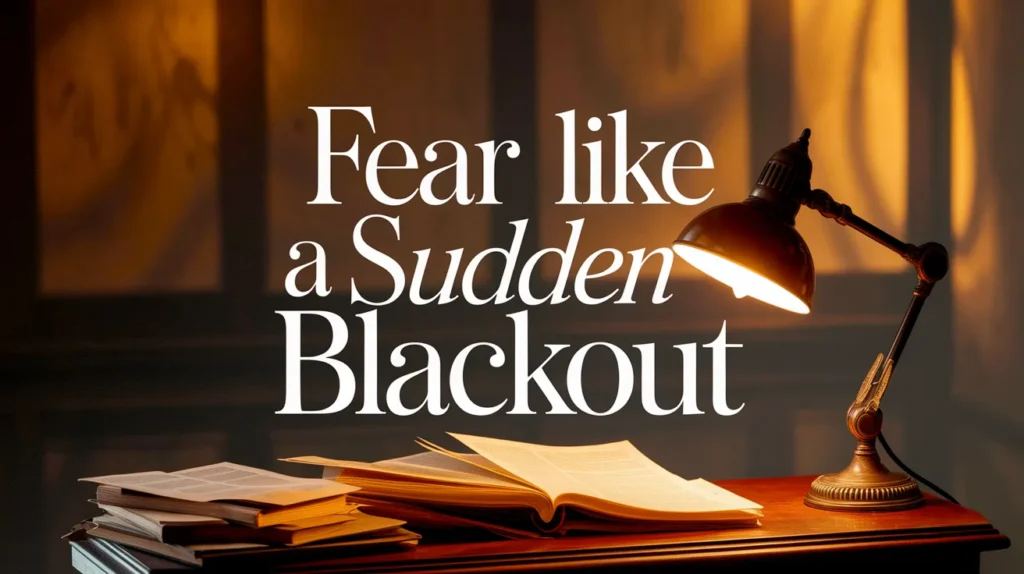
Meaning: Instant and overwhelming fear.
Usage: Shock or surprise moments.
Examples:
- Fear hit like a sudden blackout.
- Everything went dark in his mind.
- Panic erased his thoughts instantly.
- Fear took over without warning.
- The moment stunned her completely.
27. Fear like a rope tightening around the chest
Meaning: Suffocating anxiety.
Usage: Physical sensation of fear.
Examples:
- Fear tightened like a rope.
- His chest felt squeezed.
- Anxiety made it hard to breathe.
- Fear pressed heavily on him.
- The tension became unbearable.
28. Fear like a lost child in a crowd
Meaning: Confusion and vulnerability.
Usage: Emotional or helpless scenes.
Examples:
- Fear made him feel lost.
- She stood uncertain and alone.
- Anxiety surrounded her completely.
- Fear left him searching for safety.
- The moment felt overwhelming.
29. Fear like darkness swallowing light
Meaning: Fear overpowering hope.
Usage: Deep emotional or dramatic scenes.
Examples:
- Fear swallowed his hope.
- Darkness overtook her thoughts.
- Anxiety dimmed her confidence.
- Fear replaced all positivity.
- The moment felt hopeless.
30. Fear like a silent scream
Meaning: Intense but unexpressed fear.
Usage: Internal emotional struggle.
Examples:
- Fear echoed like a silent scream.
- He felt panic but said nothing.
- Anxiety stayed hidden inside her.
- Fear grew without a voice.
- The moment was quietly overwhelming.
How to Use Similes Effectively in Writing
Using similes well can greatly improve your writing across different forms:
- In poems: Use similes to create vivid imagery and emotional rhythm.
- In stories: Show character emotions instead of telling them directly.
- In essays: Add clarity and engagement to explanations.
- In songs: Make lyrics memorable and relatable.
- In descriptions: Bring scenes to life with sensory detail.
Tips:
- Keep comparisons simple and clear
- Avoid overused clichés
- Match the tone of your writing
- Use nature similes for deeper emotional connection
- Balance creativity with clarity
FAQs About Powerful Similes for Fear
1. What are powerful similes for fear?
They are comparisons that vividly express fear using relatable imagery, making emotions easier to understand.
2. What is the difference between a simile and a metaphor?
A simile uses “like” or “as,” while a metaphor directly states the comparison.
3. Why are similes important in writing?
They enhance imagery, improve understanding, and make writing more engaging.
4. Can similes be used in academic writing?
Yes, but they should be used carefully to maintain clarity and professionalism.
5. How do I create original similes?
Think of familiar images and connect them creatively to emotions or ideas.
Conclusion
Powerful similes for fear transform simple language into vivid emotional experiences. They allow readers to see, feel, and understand fear through striking comparisons.
Whether drawn from nature, human experience, or imagination, similes add clarity, depth, and beauty to writing.
By mastering them, you can express complex emotions with ease and creativity.
Keep experimenting, stay original, and let your words paint powerful images that leave a lasting impression.