

Language becomes vivid when we compare one thing to another. That’s where similes shine. They help us explain difficult emotions, layered ideas, and complicated situations in ways that feel clear and relatable.
When something feels confusing, detailed, or multi-layered, we often call it complex—but that single word sometimes isn’t enough.
The best similes for complex give depth, imagery, and emotional weight to your writing. They turn abstract thoughts into memorable pictures.
In figurative language, similes are powerful symbols of strength, growth, resilience, wisdom, and human emotion because they connect big ideas to everyday experiences.
Whether you’re writing a poem, story, essay, or song, these comparisons will help your words feel alive and meaningful.
What Is a Simile?
A simile is a figure of speech that compares two different things using the words “like” or “as.”
Example: Her thoughts were as tangled as a spider’s web.
This comparison helps readers clearly picture how complicated her thoughts are.
1. As tangled as a spider’s web
Meaning: Extremely complicated and difficult to unravel.
Usage Insight: Perfect for describing confusing situations, emotions, or relationships.
- His explanation was as tangled as a spider’s web, full of twists and turns.
- The legal case grew as tangled as a spider’s web over time.
- Her feelings were as tangled as a spider’s web after the argument.
- The plot of the novel became as tangled as a spider’s web.
- Their family history was as tangled as a spider’s web.
2. Like a maze without a map
Meaning: Confusing and hard to navigate.
Usage Insight: Works well for describing systems, cities, or thoughts.
- The instructions felt like a maze without a map.
- His mind was like a maze without a map during the exam.
- The bureaucracy was like a maze without a map.
- Their conversation turned like a maze without a map.
- The city streets were like a maze without a map.
3. As layered as an onion
Meaning: Having many levels or hidden meanings.
Usage Insight: Ideal for personalities or deep themes.
- Her personality is as layered as an onion.
- The mystery was as layered as an onion.
- His motivations seemed as layered as an onion.
- The speech was as layered as an onion.
- The conflict felt as layered as an onion.
4. Like a puzzle missing pieces
Meaning: Incomplete and difficult to fully understand.
Usage Insight: Great for unresolved stories or emotions.
- The plan felt like a puzzle missing pieces.
- His memories were like a puzzle missing pieces.
- The investigation seemed like a puzzle missing pieces.
- Their friendship was like a puzzle missing pieces.
- The evidence appeared like a puzzle missing pieces.
5. As intricate as lace
Meaning: Detailed and delicately complicated.
Usage Insight: Works beautifully in descriptive or poetic writing.
- The design was as intricate as lace.
- Her handwriting looked as intricate as lace.
- The architecture stood as intricate as lace.
- The melody sounded as intricate as lace.
- The embroidery appeared as intricate as lace.
6. Like a knot that tightens when pulled
Meaning: A problem that becomes worse with effort.
Usage Insight: Useful in emotional or conflict-driven scenes.
- The argument was like a knot that tightens when pulled.
- His excuses felt like a knot that tightens when pulled.
- The issue grew like a knot that tightens when pulled.
- Their misunderstanding was like a knot that tightens when pulled.
- The tension rose like a knot that tightens when pulled.
7. As deep as the ocean
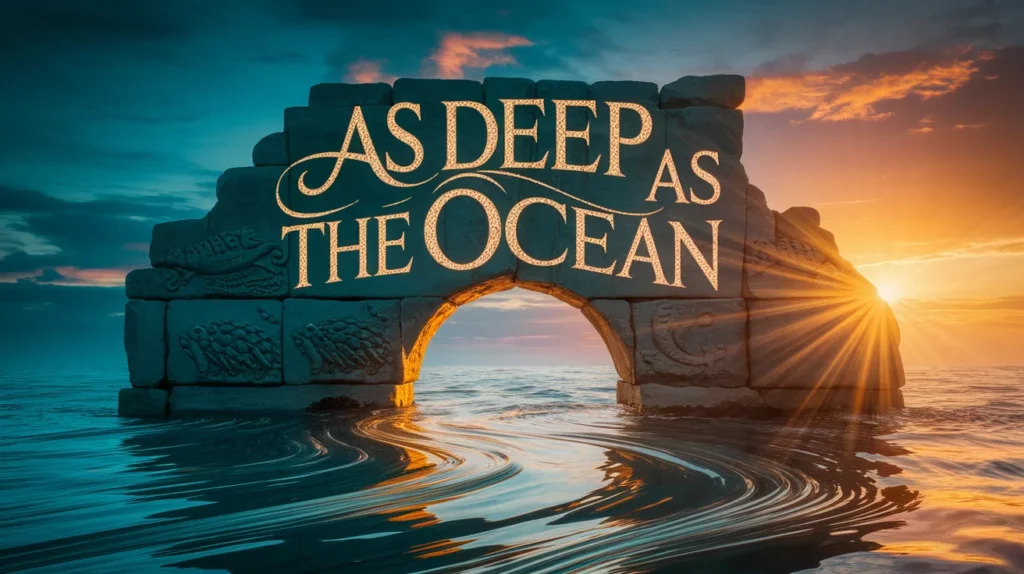
Meaning: Profound and vast.
Usage Insight: Effective for emotions and wisdom.
- Her thoughts were as deep as the ocean.
- The mystery was as deep as the ocean.
- His sorrow felt as deep as the ocean.
- The philosophy sounded as deep as the ocean.
- The silence grew as deep as the ocean.
8. Like a labyrinth of mirrors
Meaning: Confusing with repeating reflections or illusions.
Usage Insight: Perfect for psychological or surreal writing.
- His doubts felt like a labyrinth of mirrors.
- The dream unfolded like a labyrinth of mirrors.
- The strategy was like a labyrinth of mirrors.
- The relationship seemed like a labyrinth of mirrors.
- The debate became like a labyrinth of mirrors.
9. As complex as the human brain
Meaning: Extremely detailed and difficult to fully understand.
Usage Insight: Ideal for academic or scientific comparisons.
- The system was as complex as the human brain.
- Her reasoning appeared as complex as the human brain.
- The algorithm felt as complex as the human brain.
- The ecosystem stood as complex as the human brain.
- The problem seemed as complex as the human brain.
10. Like threads woven into a tapestry
Meaning: Interconnected and interdependent.
Usage Insight: Great for social, cultural, or emotional themes.
- Their lives were like threads woven into a tapestry.
- The story unfolded like threads woven into a tapestry.
- The community functioned like threads woven into a tapestry.
- His memories connected like threads woven into a tapestry.
- The project grew like threads woven into a tapestry.
11. As twisted as a corkscrew
- The plot was as twisted as a corkscrew.
- His logic sounded as twisted as a corkscrew.
- The path climbed as twisted as a corkscrew.
- The debate felt as twisted as a corkscrew.
- The reasoning grew as twisted as a corkscrew.
12. Like a storm of crossing currents
- The meeting felt like a storm of crossing currents.
- Her emotions moved like a storm of crossing currents.
- The negotiation became like a storm of crossing currents.
- The discussion sounded like a storm of crossing currents.
- The crisis unfolded like a storm of crossing currents.
13. As detailed as a blueprint
- The plan was as detailed as a blueprint.
- His vision stood as detailed as a blueprint.
- The strategy looked as detailed as a blueprint.
- Her notes were as detailed as a blueprint.
- The proposal appeared as detailed as a blueprint.
14. Like a chess game in motion
- The debate moved like a chess game in motion.
- The rivalry felt like a chess game in motion.
- The negotiation unfolded like a chess game in motion.
- The politics worked like a chess game in motion.
- The strategy played out like a chess game in motion.
15. As winding as a mountain road
Meaning: Full of twists, turns, and unexpected changes.
Usage Insight: Ideal for describing complicated journeys, stories, or decision-making processes.
- The investigation was as winding as a mountain road, revealing new turns at every step.
- Her career path proved as winding as a mountain road, shaped by bold choices and sudden shifts.
- The conversation drifted as winding as a mountain road, circling back to old arguments.
- His explanation felt as winding as a mountain road, difficult to follow from start to finish.
- The plot unfolded as winding as a mountain road, keeping readers guessing.
16. Like a code written in symbols
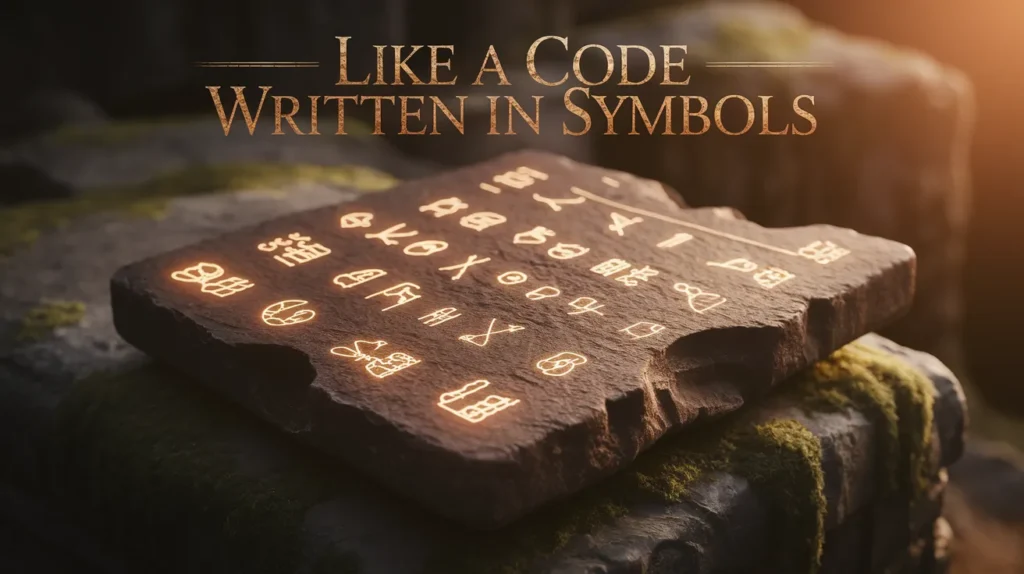
Meaning: Difficult to interpret or understand.
Usage Insight: Works well for abstract ideas, cryptic messages, or mysterious behavior.
- His text messages felt like a code written in symbols.
- The ancient manuscript appeared like a code written in symbols.
- Her silence was like a code written in symbols, hiding deeper meaning.
- The instructions seemed like a code written in symbols to beginners.
- The theory sounded like a code written in symbols to those outside the field.
17. As interlocked as gears in a clock
Meaning: Closely connected and dependent on each other.
Usage Insight: Perfect for systems, teamwork, or cause-and-effect relationships.
- The departments worked as interlocked as gears in a clock.
- Their ideas fit together as interlocked as gears in a clock.
- The ecosystem functions as interlocked as gears in a clock.
- The scenes in the novel were as interlocked as gears in a clock.
- The strategy operated as interlocked as gears in a clock.
18. Like a garden of tangled vines
Meaning: Overgrown, intertwined, and difficult to separate.
Usage Insight: Effective for emotional conflicts or complicated histories.
- Their shared past felt like a garden of tangled vines.
- The rumor spread like a garden of tangled vines.
- His thoughts grew like a garden of tangled vines.
- The political alliances looked like a garden of tangled vines.
- The family tree resembled a garden of tangled vines.
19. As mysterious as the night sky
Meaning: Deep, vast, and filled with unknown elements.
Usage Insight: Beautiful in poetic, emotional, or philosophical writing.
- Her eyes were as mysterious as the night sky.
- The universe remains as mysterious as the night sky.
- His intentions felt as mysterious as the night sky.
- The abandoned house stood as mysterious as the night sky.
- The silence lingered as mysterious as the night sky.
20. Like layers of sediment in stone
Meaning: Built over time with hidden depth and history.
Usage Insight: Excellent for describing personal growth or long-term development.
- Her wisdom formed like layers of sediment in stone.
- The conflict developed like layers of sediment in stone.
- His identity evolved like layers of sediment in stone.
- The culture shaped itself like layers of sediment in stone.
- Their bond strengthened like layers of sediment in stone.
21. As elaborate as a royal ceremony
Meaning: Highly detailed and carefully organized.
Usage Insight: Ideal for grand events, plans, or formal situations.
- The wedding was as elaborate as a royal ceremony.
- His presentation appeared as elaborate as a royal ceremony.
- The celebration felt as elaborate as a royal ceremony.
- The strategy was as elaborate as a royal ceremony.
- The décor stood as elaborate as a royal ceremony.
22. Like echoes in a cavern
Meaning: Repeating and overlapping in confusing ways.
Usage Insight: Perfect for emotional memories or repetitive thoughts.
- Her doubts returned like echoes in a cavern.
- The accusations rang like echoes in a cavern.
- His fears lingered like echoes in a cavern.
- The debate continued like echoes in a cavern.
- The memory resurfaced like echoes in a cavern.
23. As knotted as fishing lines
Meaning: Hopelessly tangled or complicated.
Usage Insight: Useful for describing confusion or messy situations.
- The paperwork became as knotted as fishing lines.
- His lies grew as knotted as fishing lines.
- Their relationship felt as knotted as fishing lines.
- The wires looked as knotted as fishing lines.
- The argument turned as knotted as fishing lines.
24. Like branches of an ancient tree
Meaning: Expanding in many directions from one source.
Usage Insight: Works beautifully for describing family, knowledge, or influence.
- Her ideas spread like branches of an ancient tree.
- The organization grew like branches of an ancient tree.
- The legend expanded like branches of an ancient tree.
- His responsibilities multiplied like branches of an ancient tree.
- The story developed like branches of an ancient tree.
25. As complicated as a legal contract
Meaning: Extremely detailed and hard to understand.
Usage Insight: Great for formal or analytical contexts.
- The agreement sounded as complicated as a legal contract.
- His explanation felt as complicated as a legal contract.
- The policy appeared as complicated as a legal contract.
- The instructions seemed as complicated as a legal contract.
- The rules were as complicated as a legal contract.
26. Like ripples crossing in water

Meaning: Intersecting effects or influences.
Usage Insight: Effective for showing cause and consequence.
- Their decisions spread like ripples crossing in water.
- The rumors moved like ripples crossing in water.
- Her words echoed like ripples crossing in water.
- The changes unfolded like ripples crossing in water.
- The emotions collided like ripples crossing in water.
27. As multifaceted as a diamond
Meaning: Having many sides or dimensions.
Usage Insight: Ideal for describing personality or talent.
- Her character is as multifaceted as a diamond.
- The issue remains as multifaceted as a diamond.
- His talent shines as multifaceted as a diamond.
- The conflict feels as multifaceted as a diamond.
- The culture stands as multifaceted as a diamond.
28. Like a symphony of many instruments
Meaning: Complex yet harmoniously connected.
Usage Insight: Perfect for teamwork or layered creativity.
- The performance flowed like a symphony of many instruments.
- Their collaboration worked like a symphony of many instruments.
- The city buzzed like a symphony of many instruments.
- The novel unfolded like a symphony of many instruments.
- The project progressed like a symphony of many instruments.
29. As dense as a rainforest
Meaning: Thick, rich, and full of overlapping elements.
Usage Insight: Excellent for describing heavy information or imagery.
- The textbook was as dense as a rainforest.
- His speech sounded as dense as a rainforest.
- The plot grew as dense as a rainforest.
- The research paper appeared as dense as a rainforest.
- The atmosphere felt as dense as a rainforest.
30. Like an equation with too many variables
Meaning: Overly complicated with many influencing factors.
Usage Insight: Strong in academic, scientific, or analytical writing.
- The situation felt like an equation with too many variables.
- Their relationship seemed like an equation with too many variables.
- The economy behaves like an equation with too many variables.
- The negotiation unfolded like an equation with too many variables.
- The outcome remains like an equation with too many variables.
How to Use Similes Effectively in Writing
To make your similes powerful and natural:
- Be specific: Choose comparisons readers can easily visualize.
- Match tone: A poetic simile fits poetry; a technical one fits essays.
- Avoid clichés: Fresh comparisons stand out.
- Keep clarity first: Similes should simplify, not confuse.
- Use sparingly: Too many comparisons can overwhelm readers.
In poems, similes create emotion. In stories, they add depth. In essays, they clarify complex ideas. In songs, they create rhythm and imagery.
FAQs
1. What are the best similes for complex situations?
Comparisons like “as tangled as a spider’s web” or “like a maze without a map” clearly express confusion and depth.
2. What is the difference between a simile and a metaphor?
A simile uses like or as to compare, while a metaphor directly states one thing is another.
3. Can similes be used in academic writing?
Yes, especially to clarify difficult concepts in essays or presentations.
4. Are similes important in literature?
Absolutely. Many classic works use similes to build imagery and emotion.
5. How do I create original similes?
Think about the feeling or idea you want to describe, then compare it to something vivid and relatable.
Conclusion
The best similes for complex ideas help writers turn confusion into clarity. They transform abstract thoughts into vivid pictures readers can easily understand.
Whether describing emotions as deep as the ocean or systems as intricate as lace, these comparisons strengthen your message. Similes add imagery, emotional depth, and creativity to language.
When used thoughtfully, they make your writing more powerful, memorable, and engaging. Mastering them means mastering the art of expression itself.